

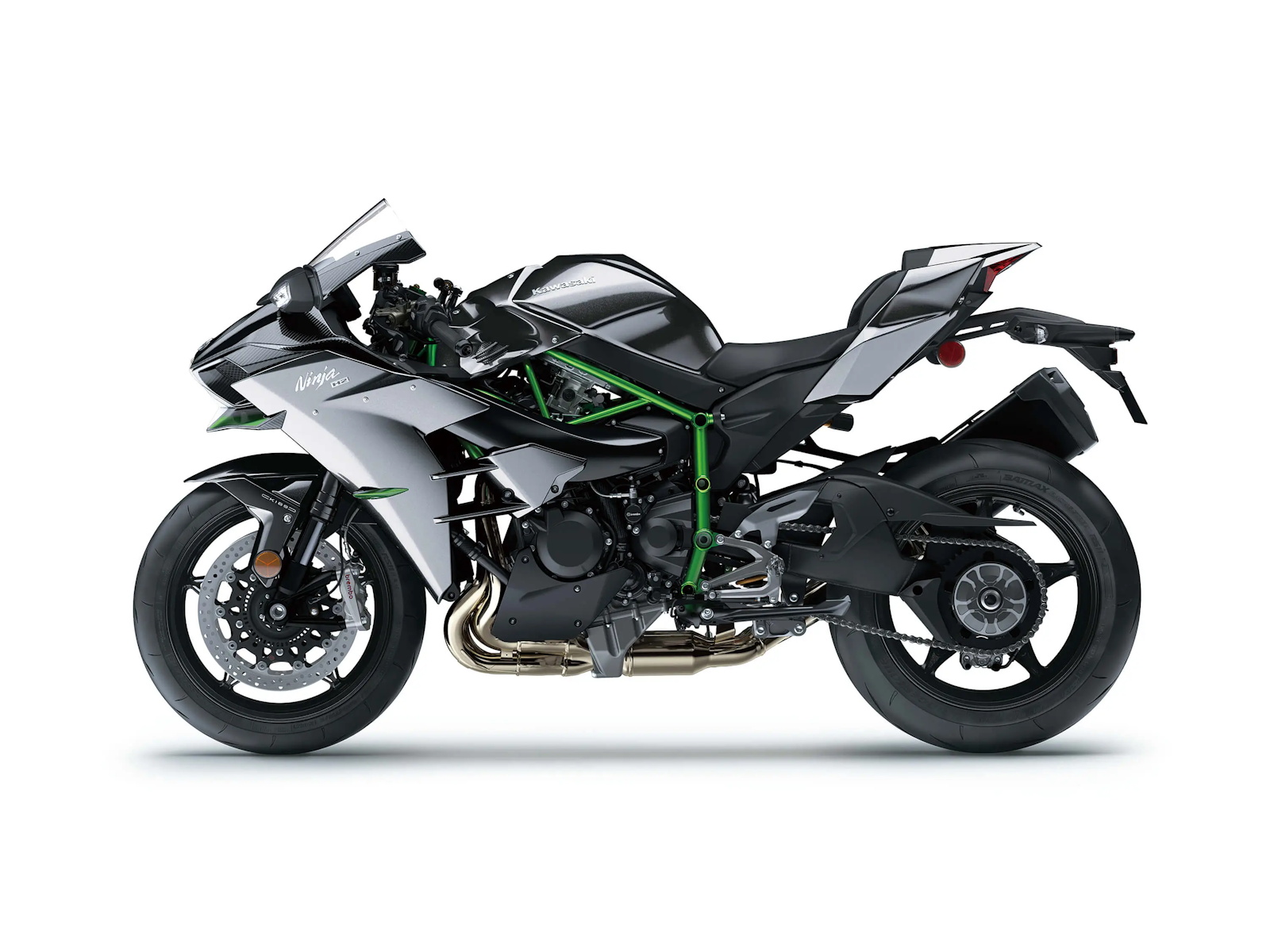
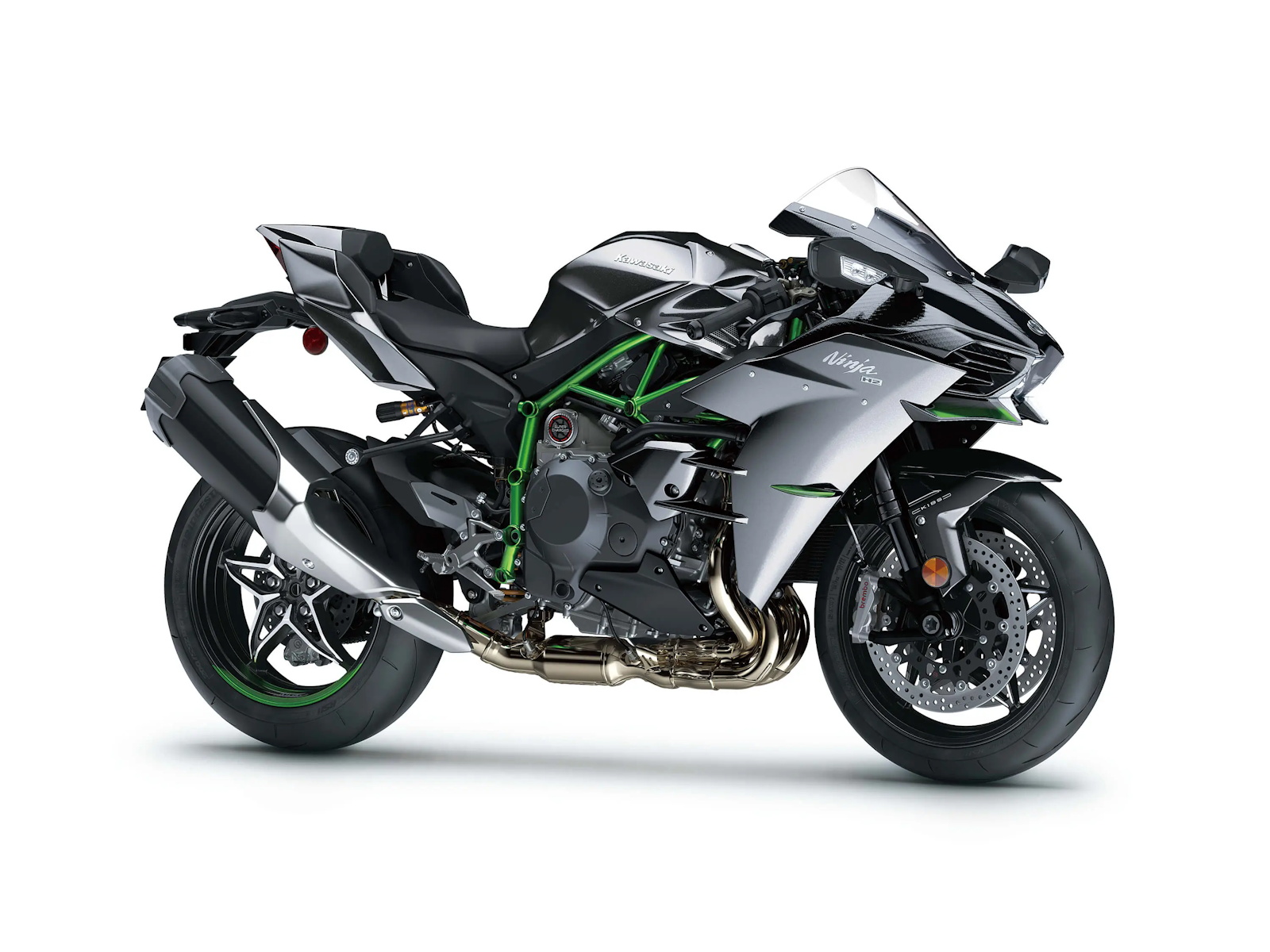
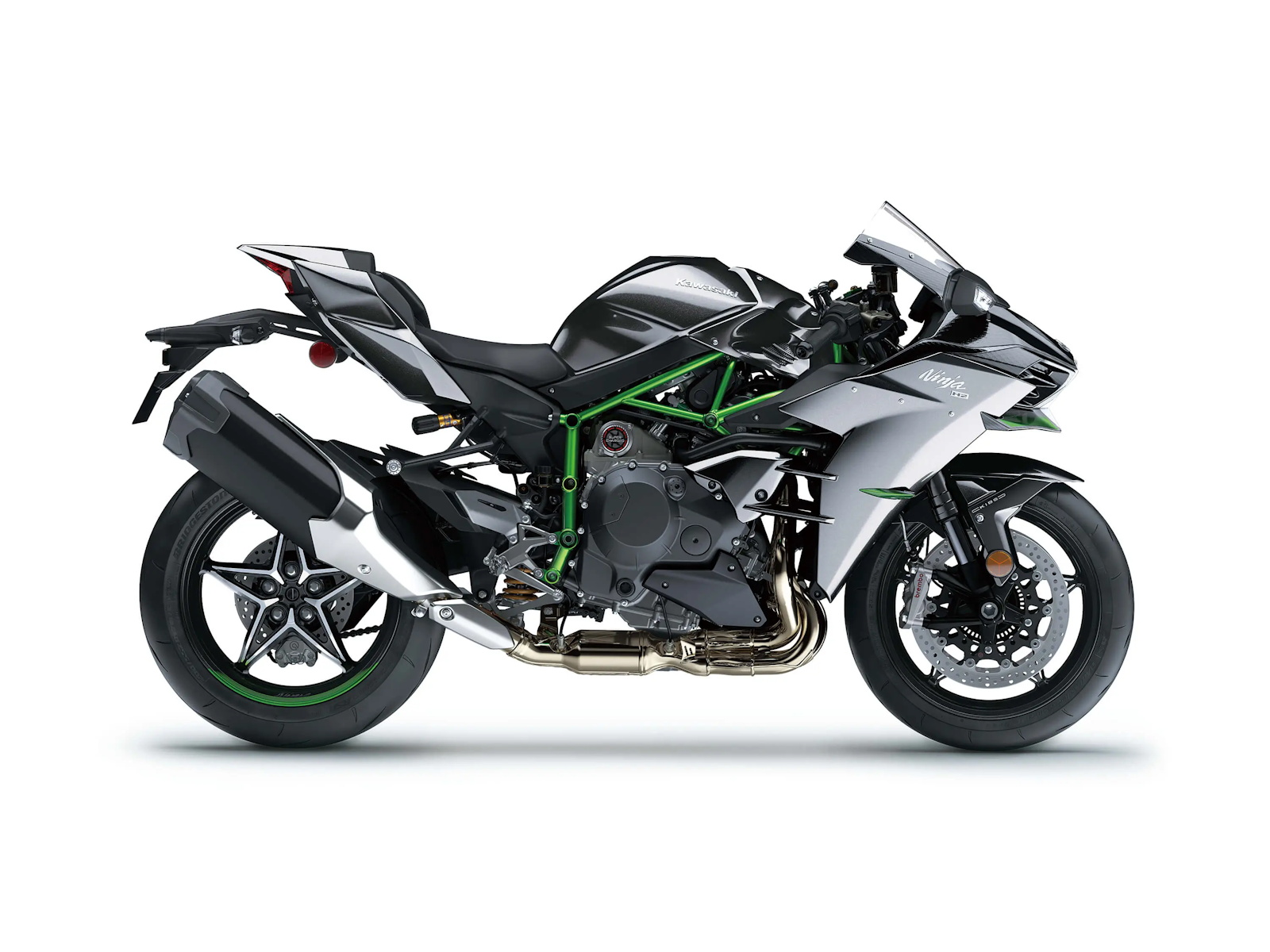
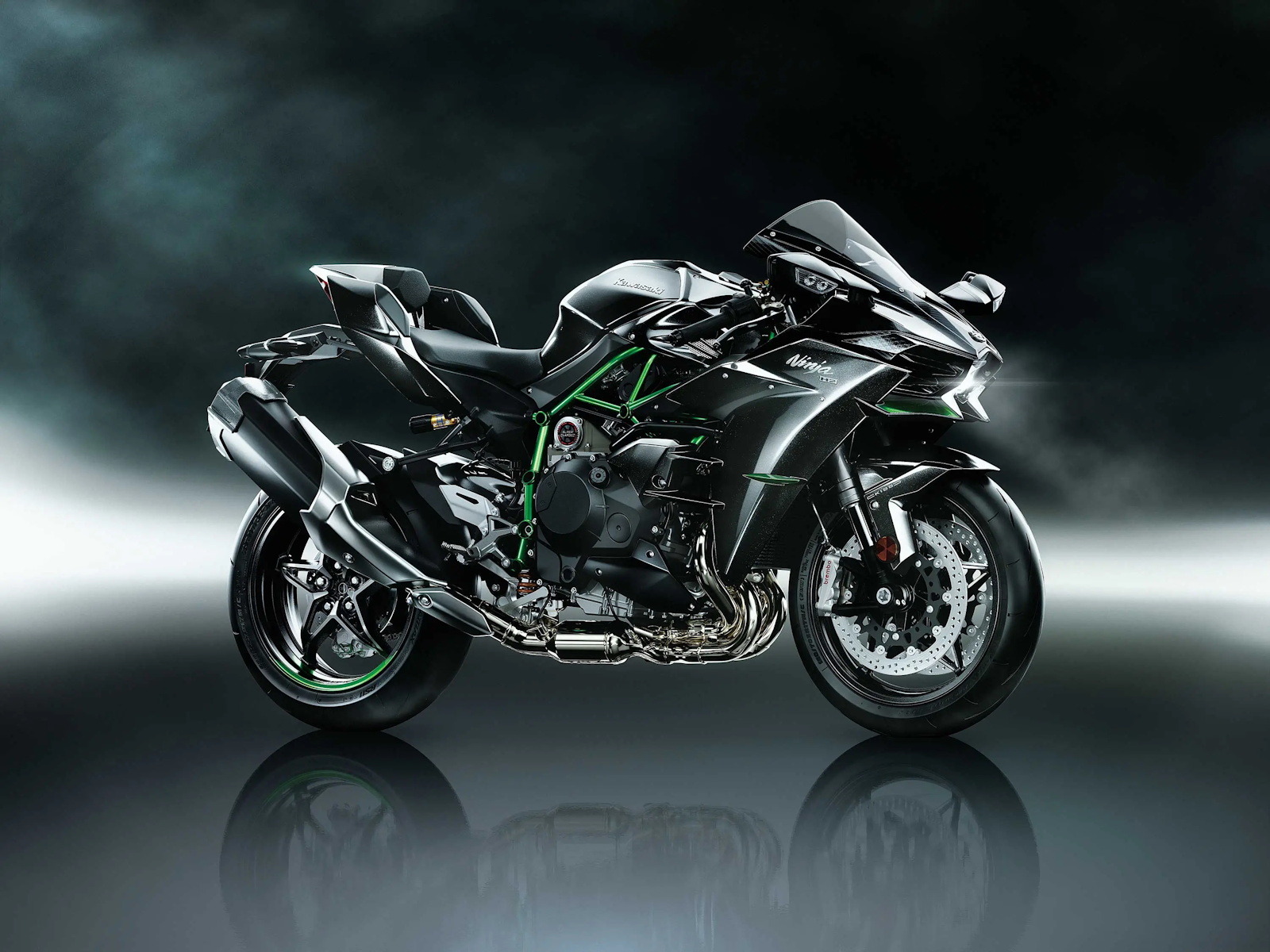
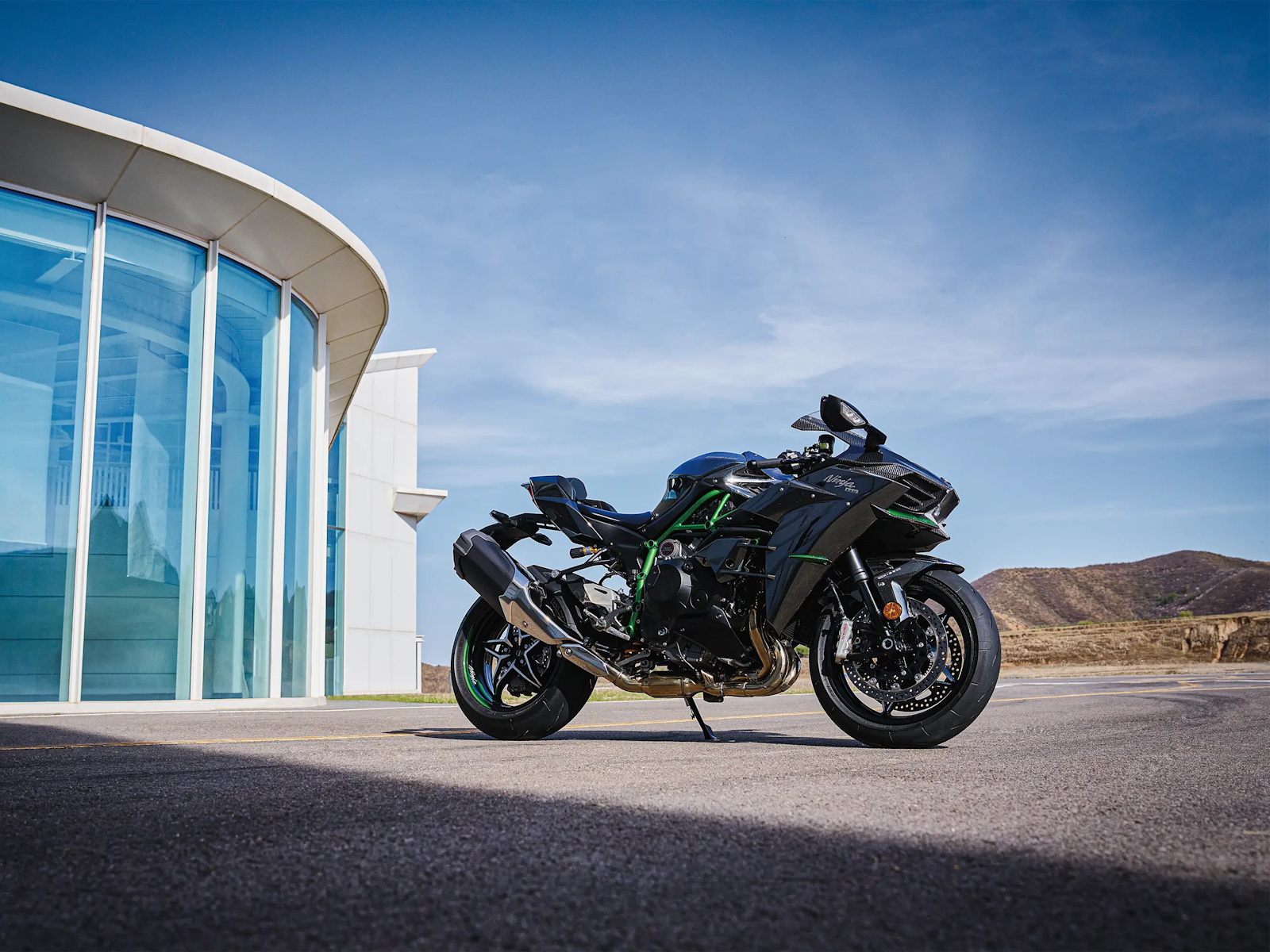
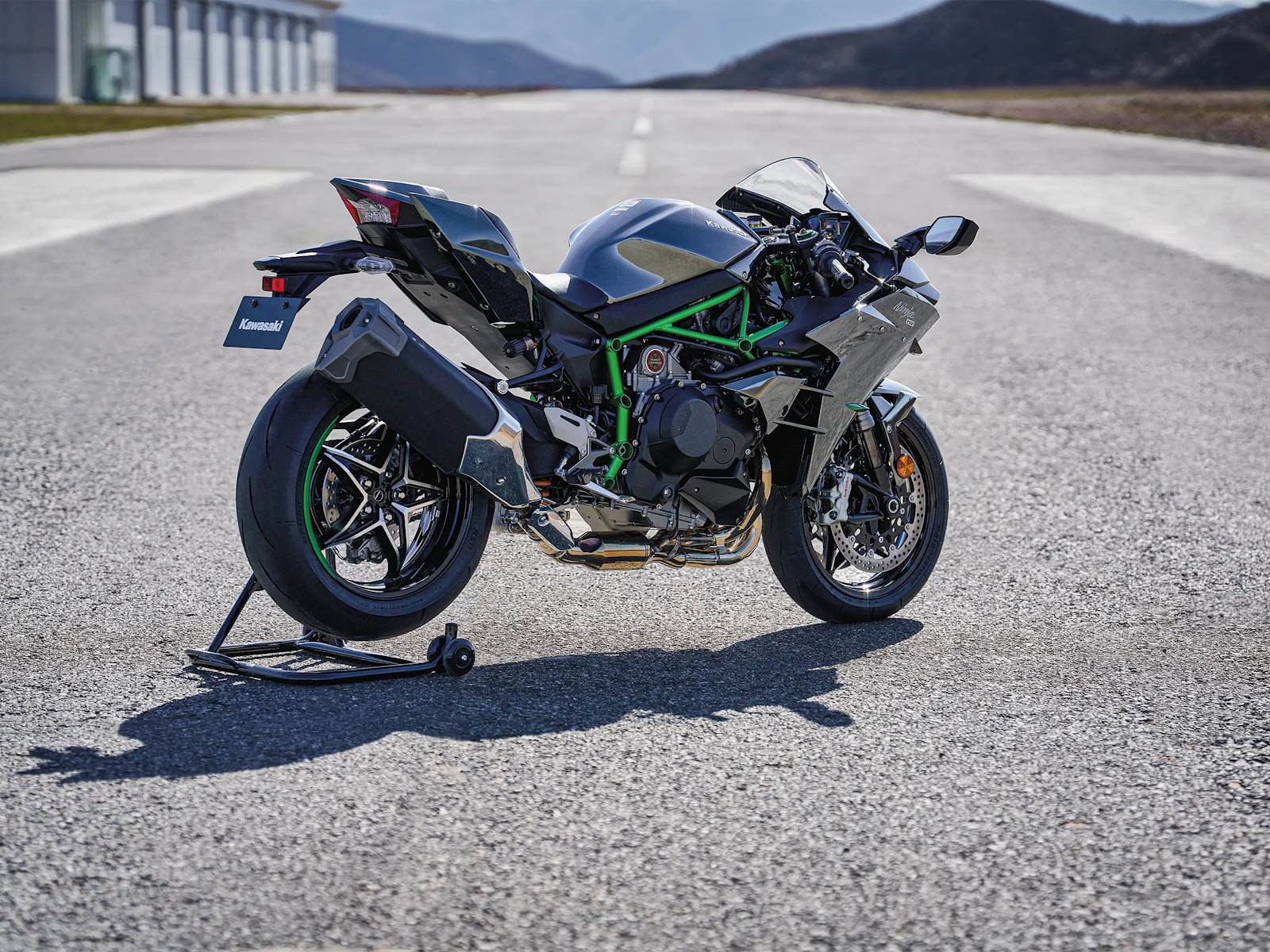
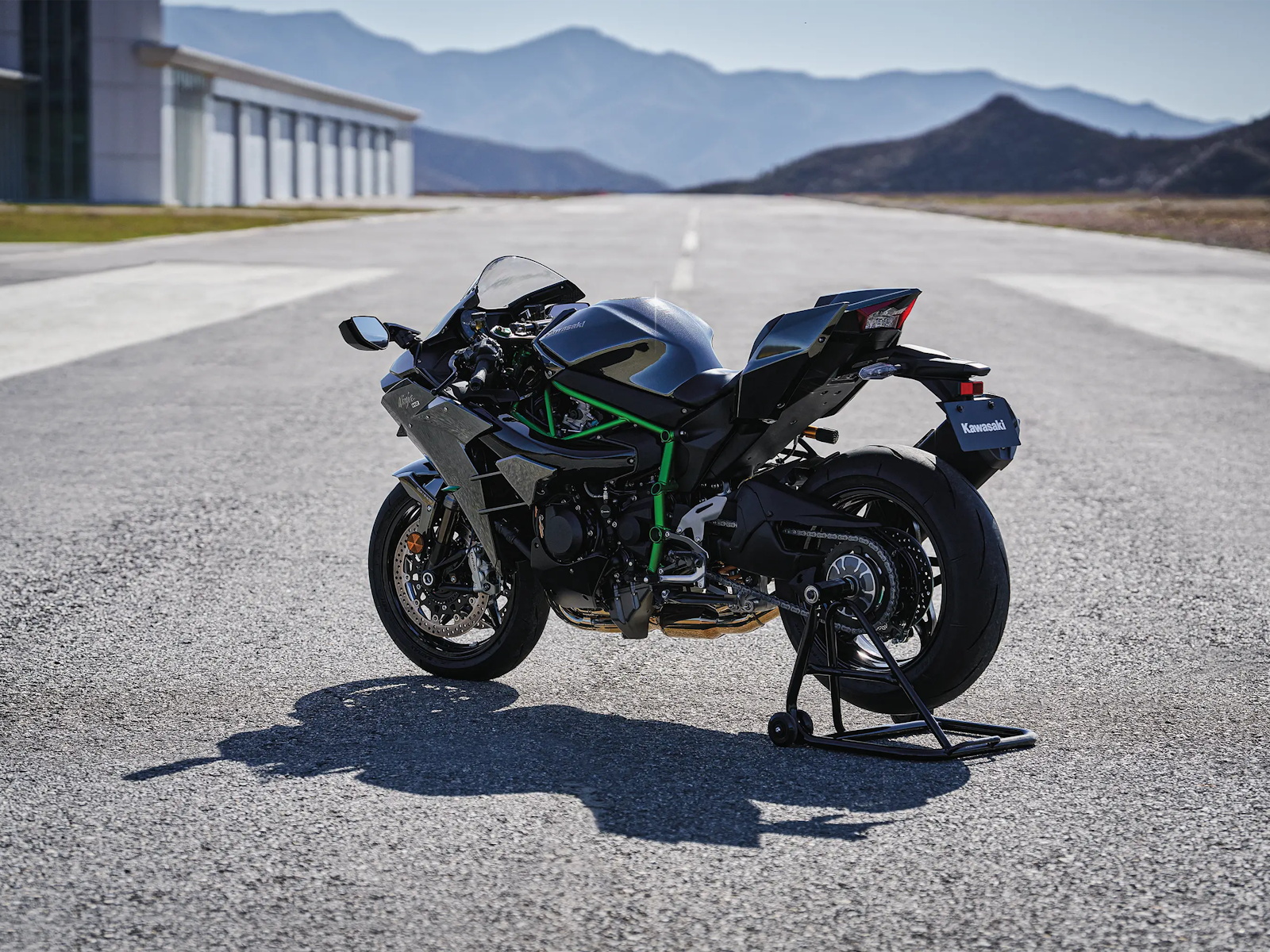
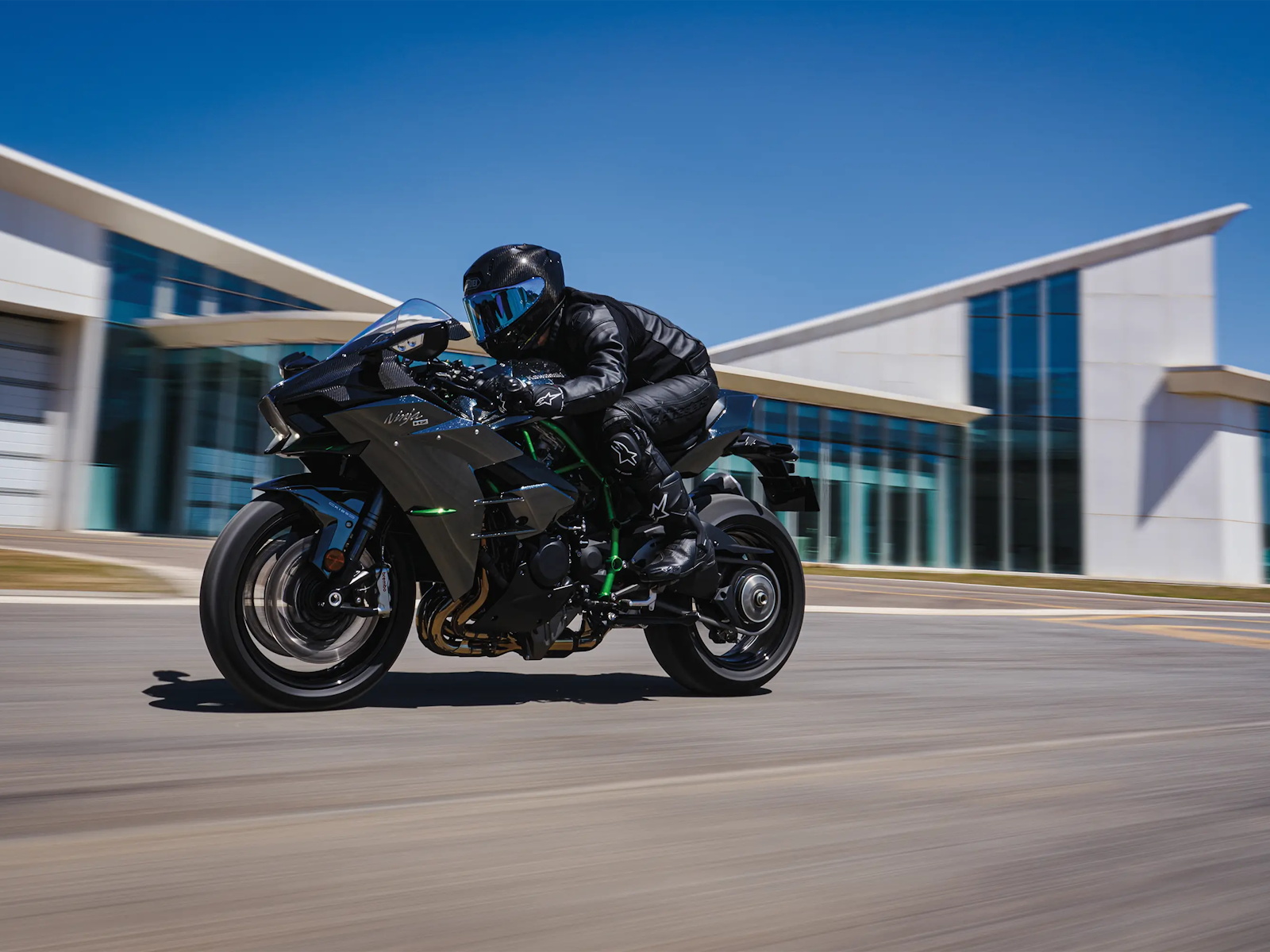
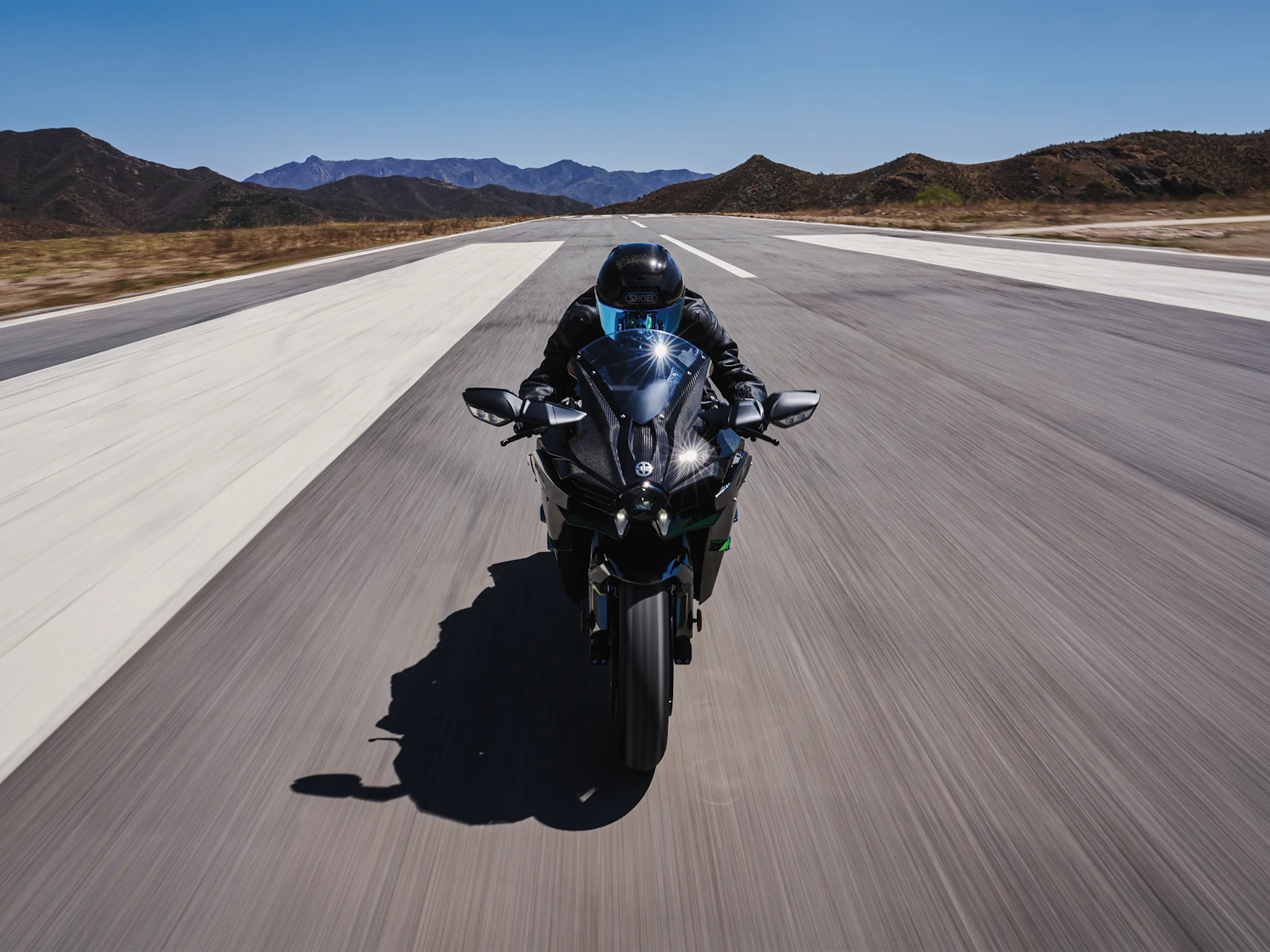
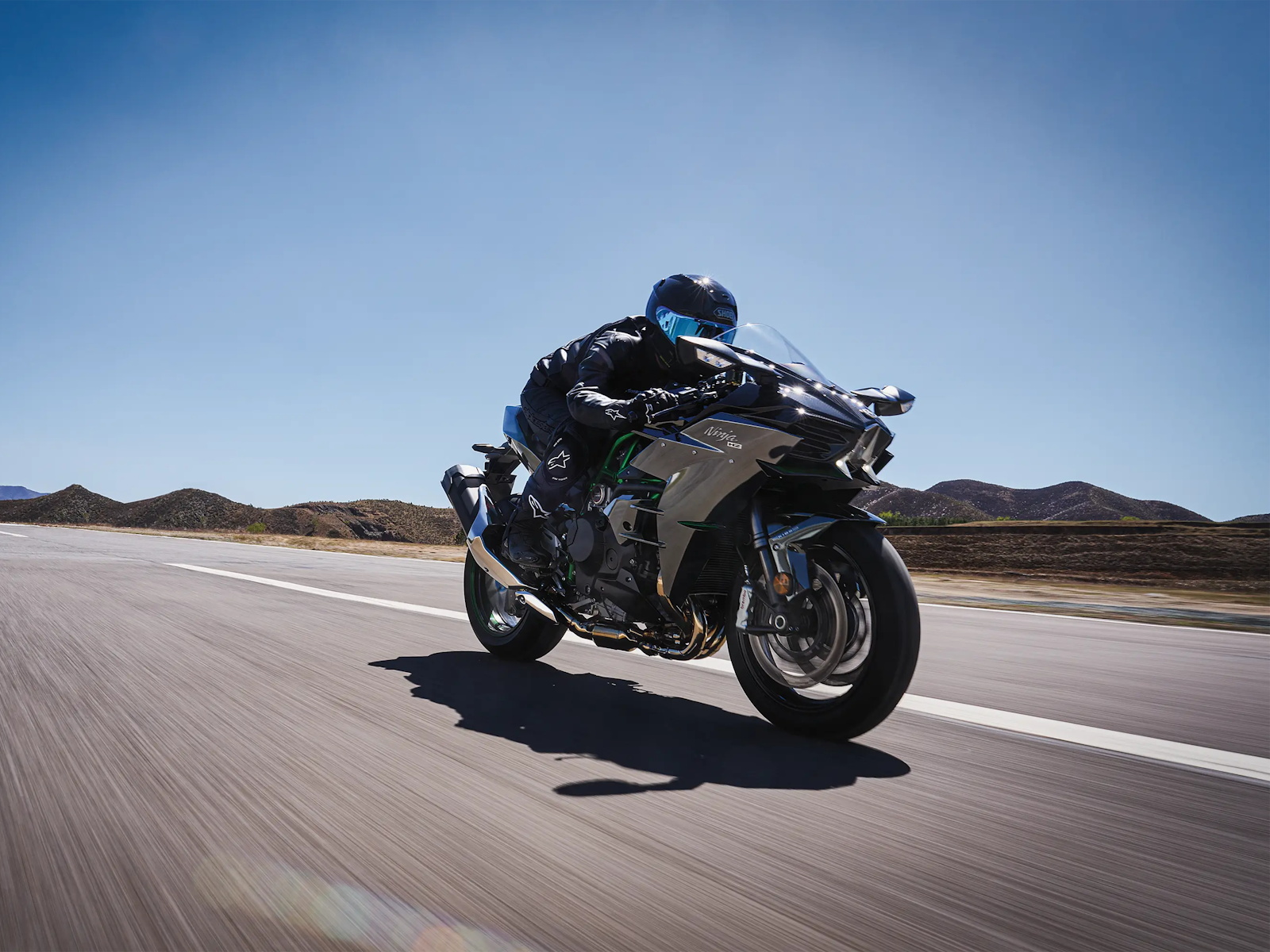
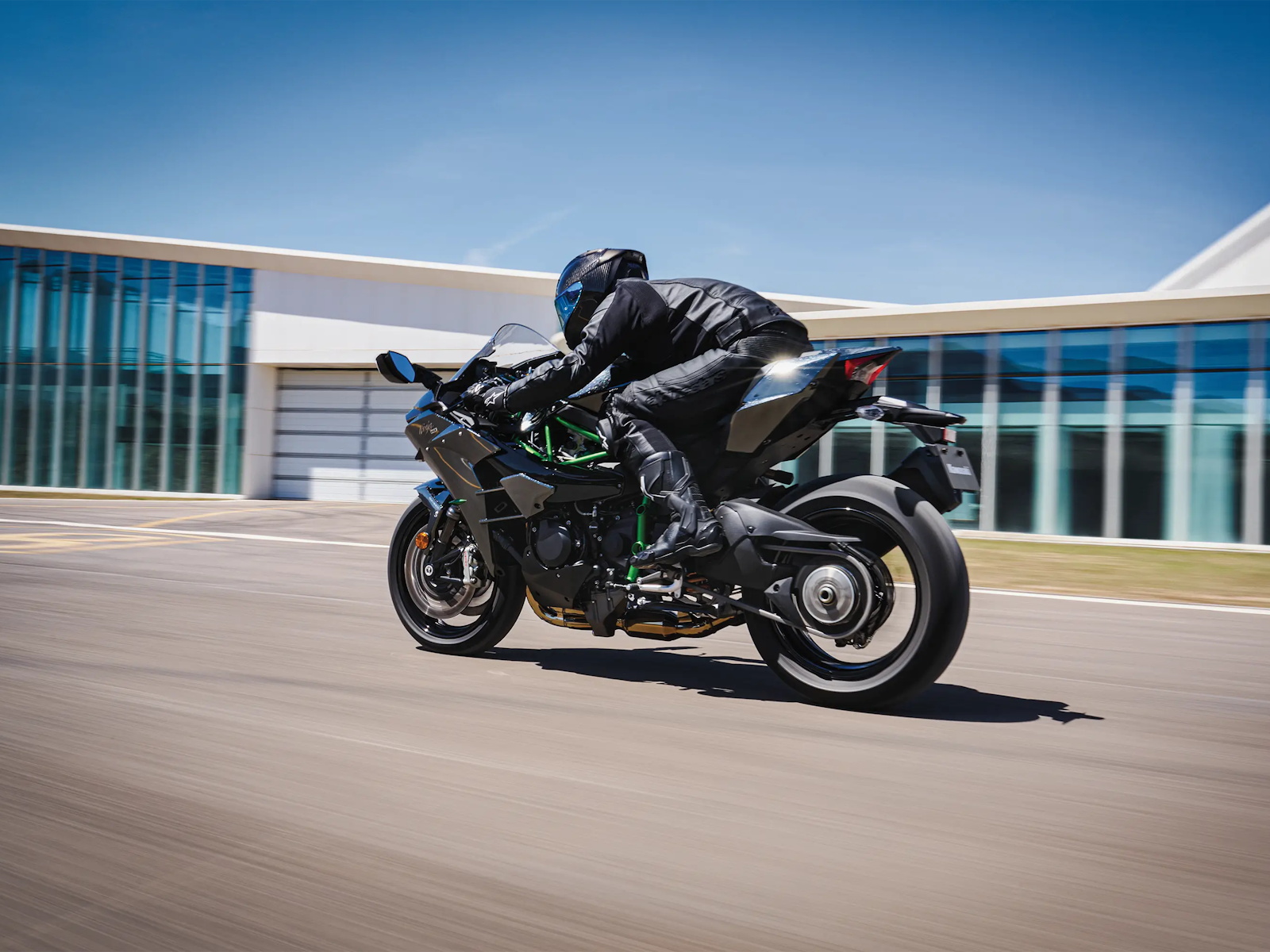
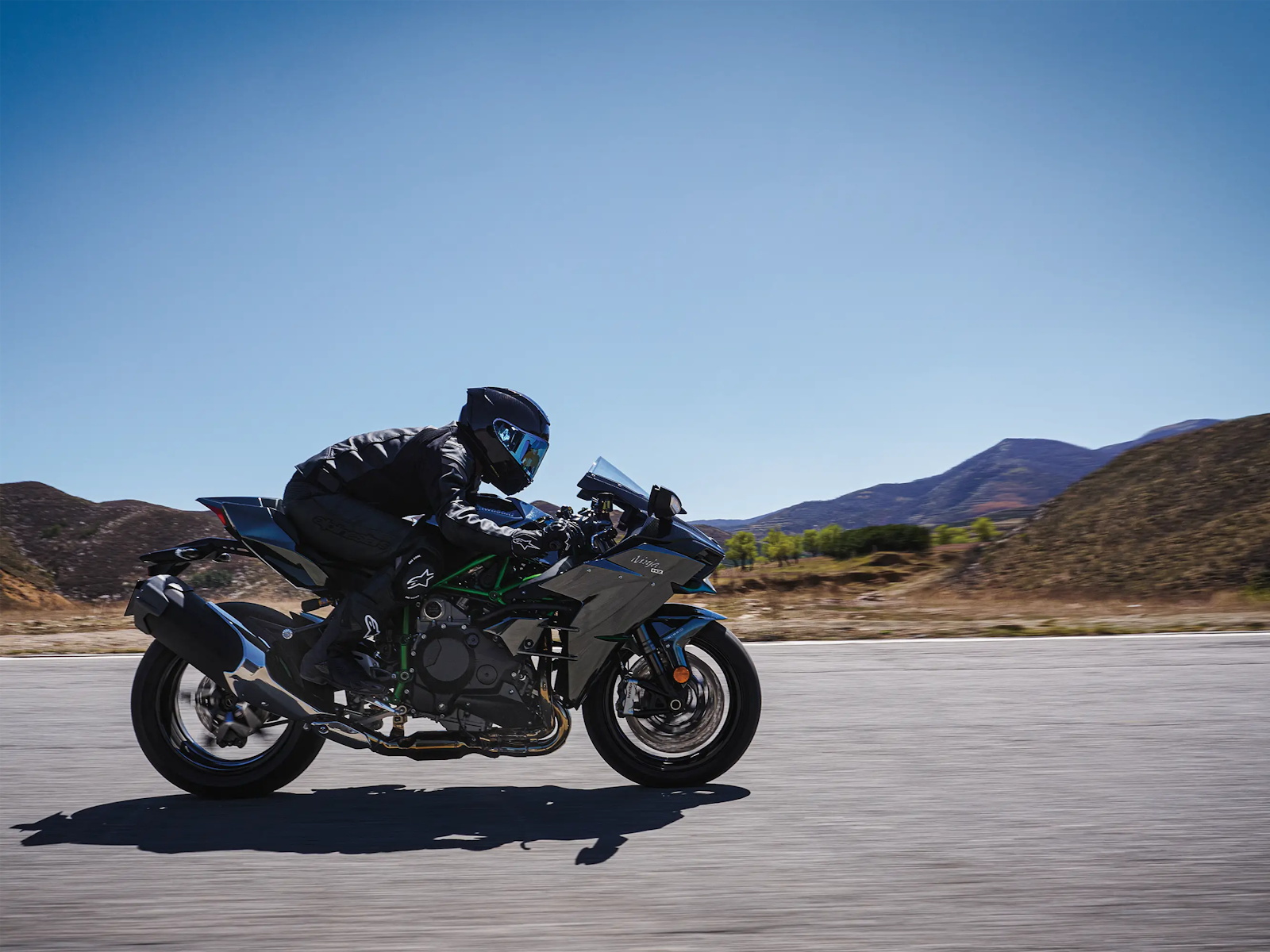
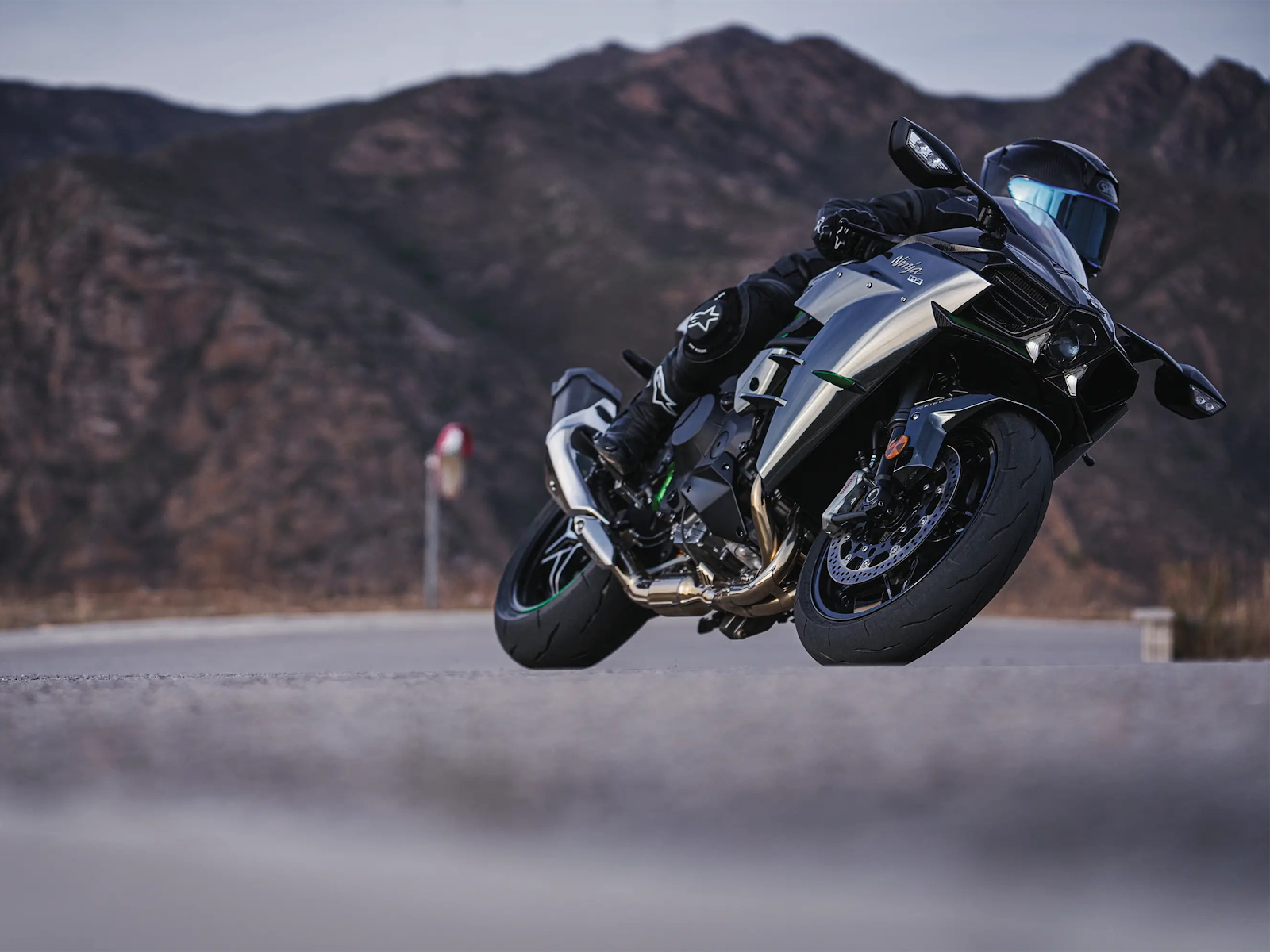
2027 Kawasaki Ninja H2 Carbon ABS Mirror Coated Spark Black
Get in Touch
Description
2027 Kawasaki Ninja H2 Carbon ABS Mirror Coated Spark Black
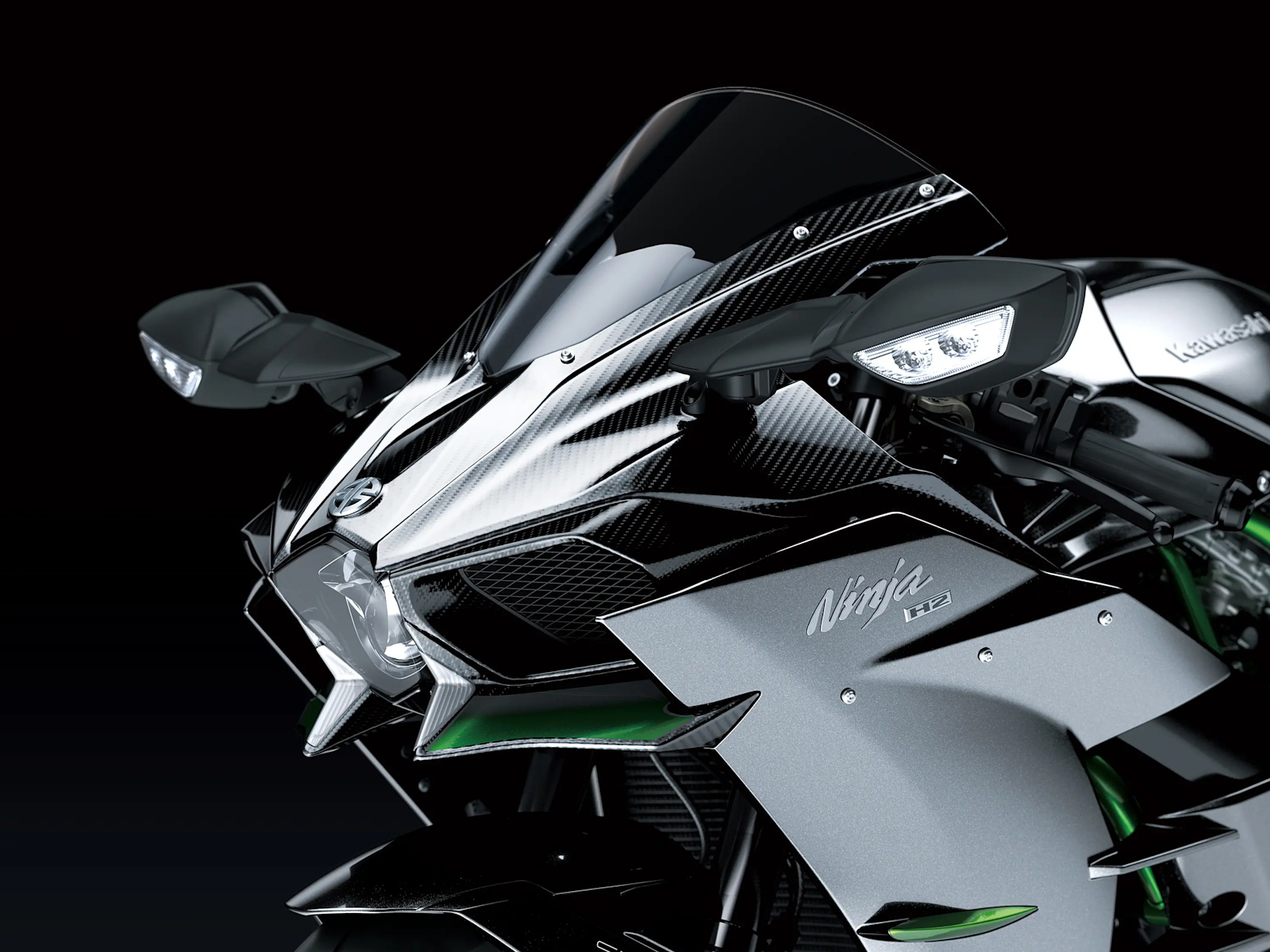
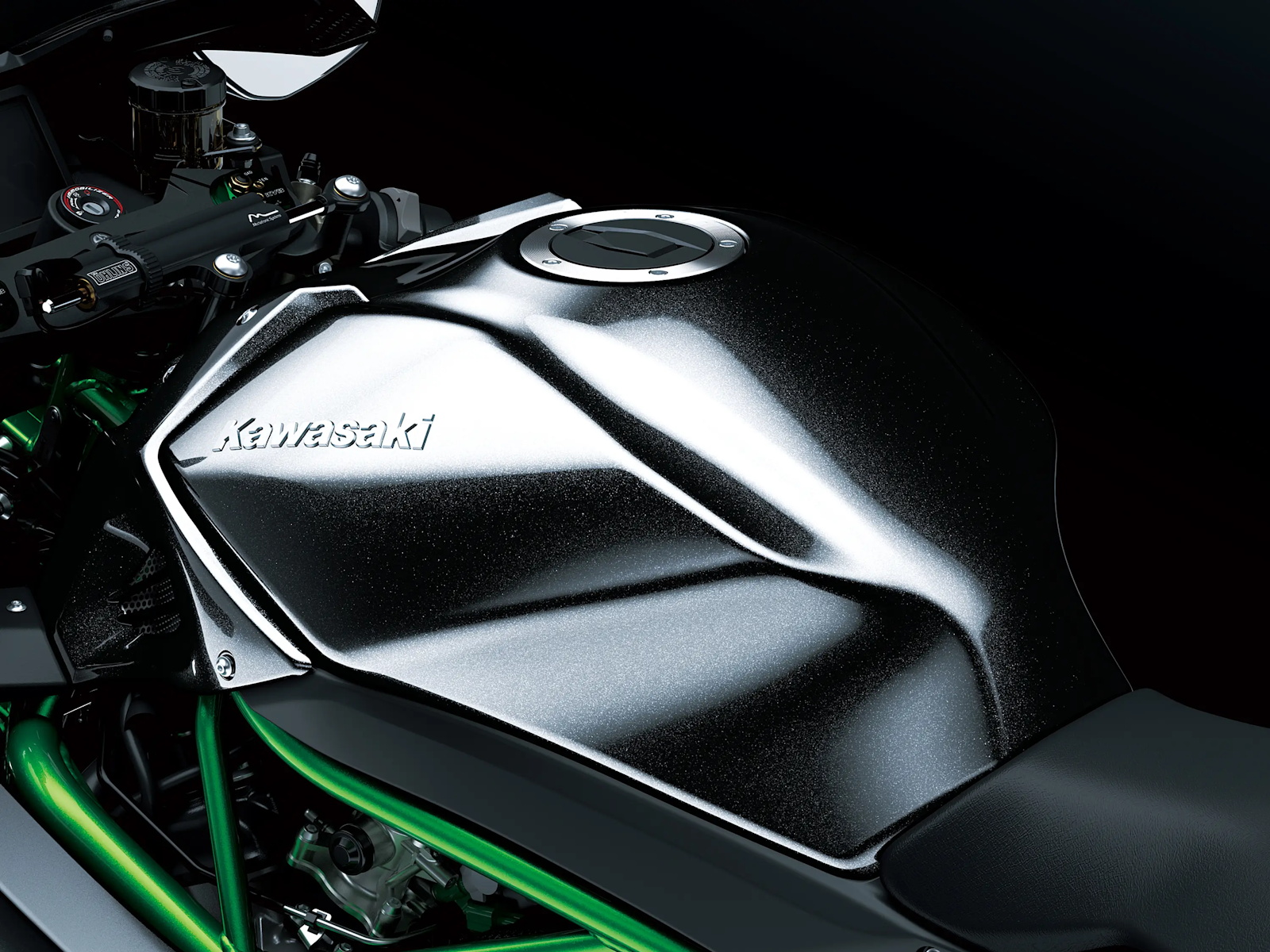
Refined for today's riding environment while retaining the unmistakable character of its predecessor, the new Ninja H2® CARBON ABS proudly takes its place as a modern evolution of Kawasaki's supercharged flagship.
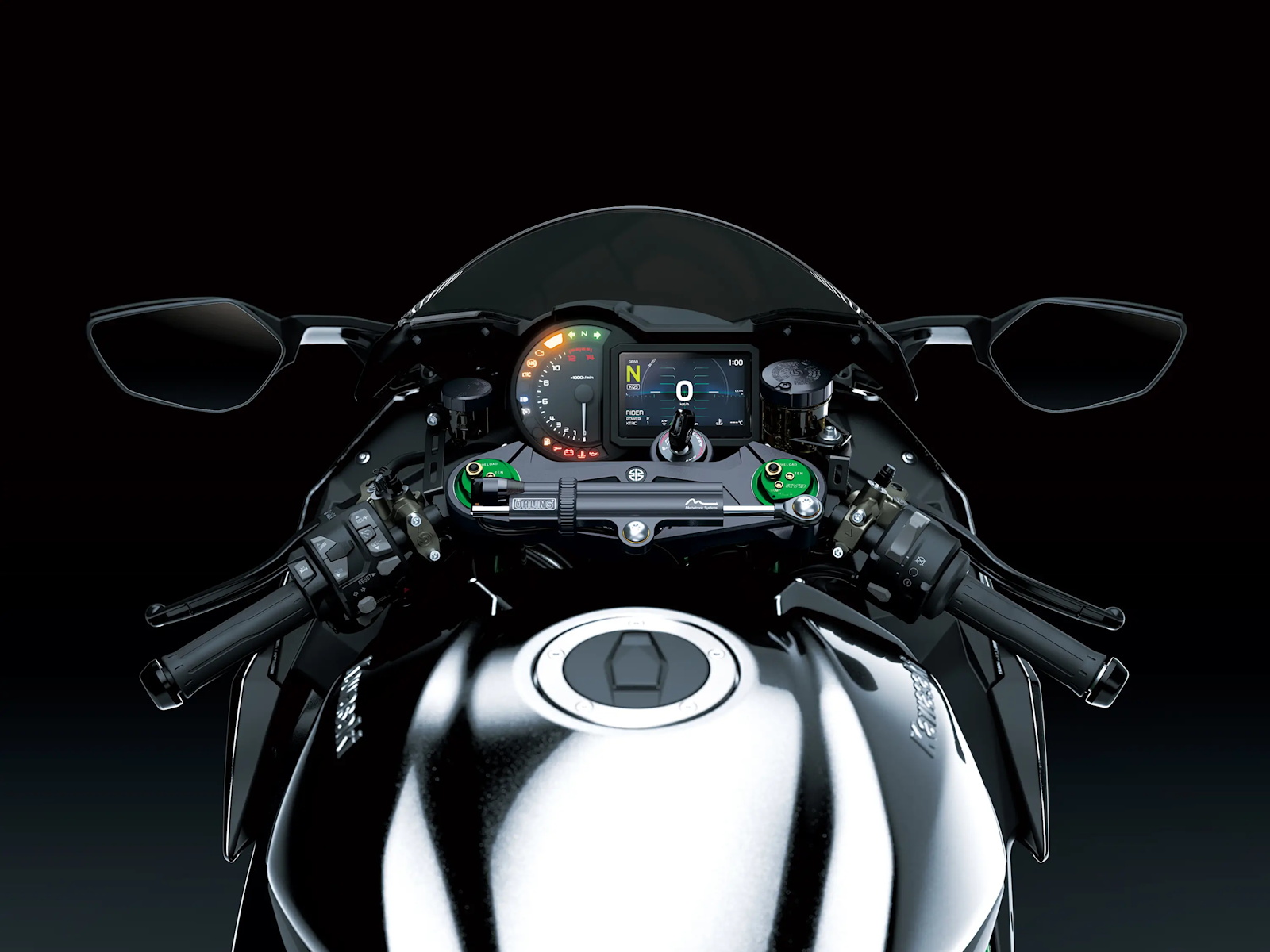
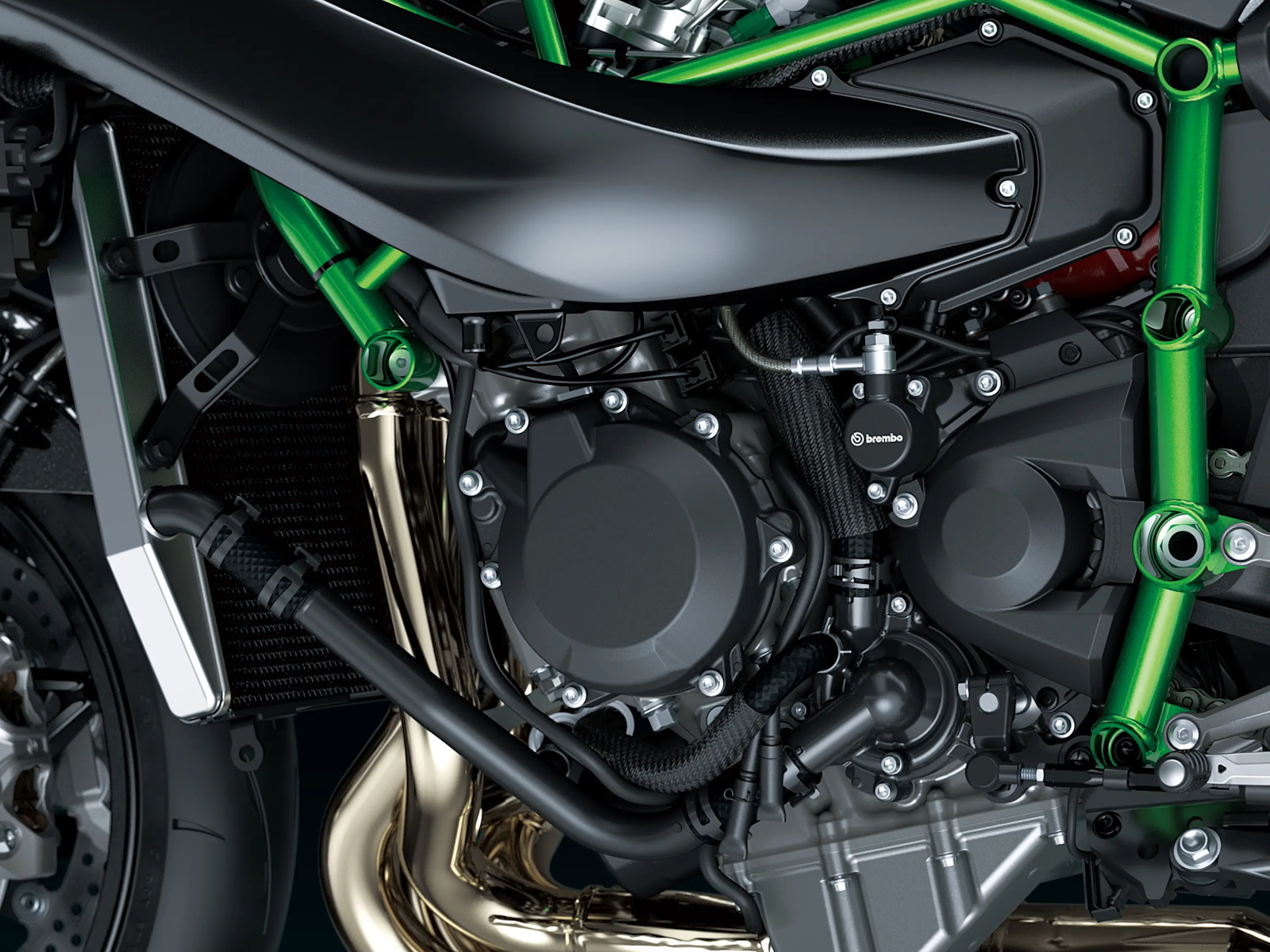
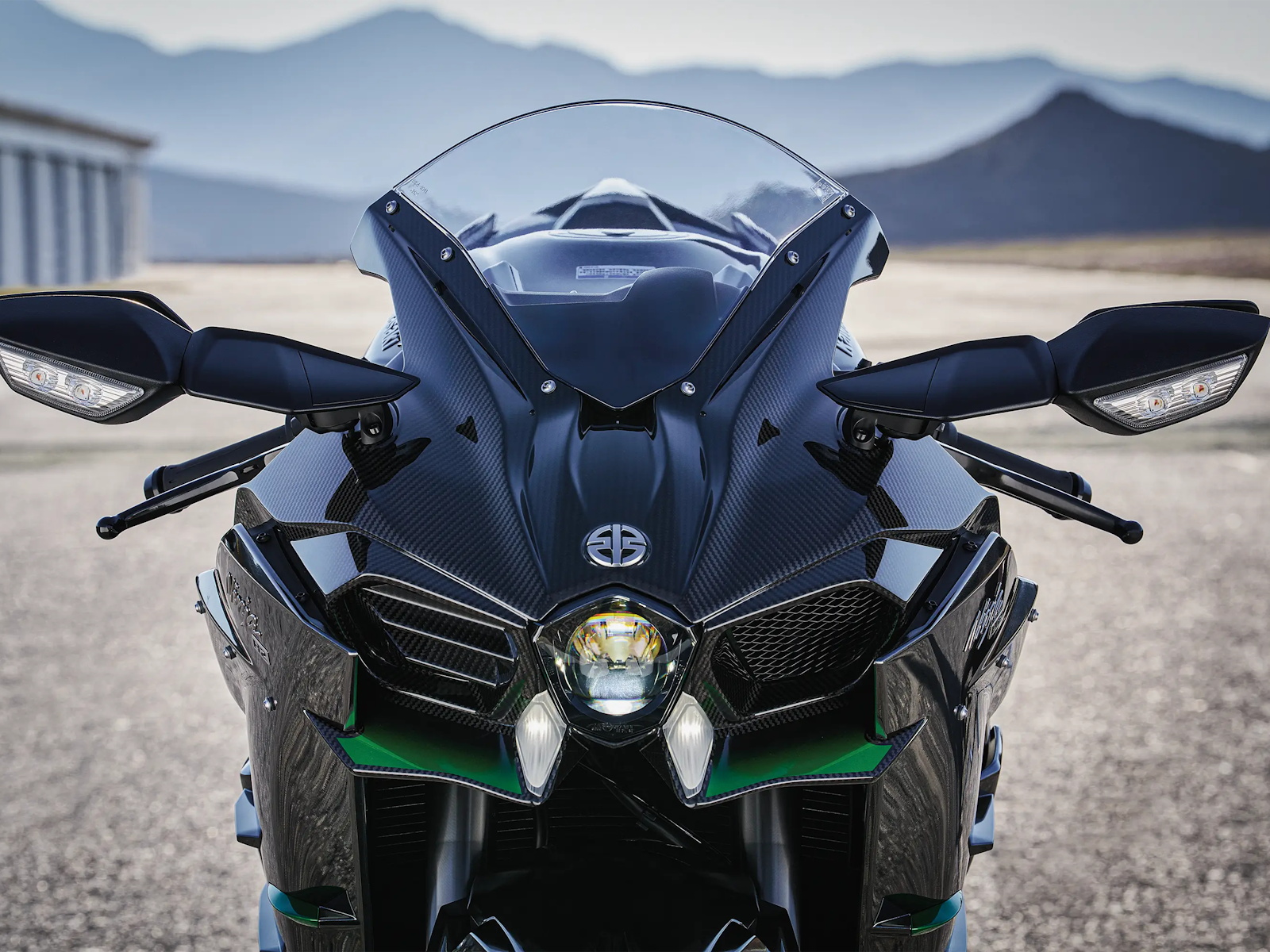
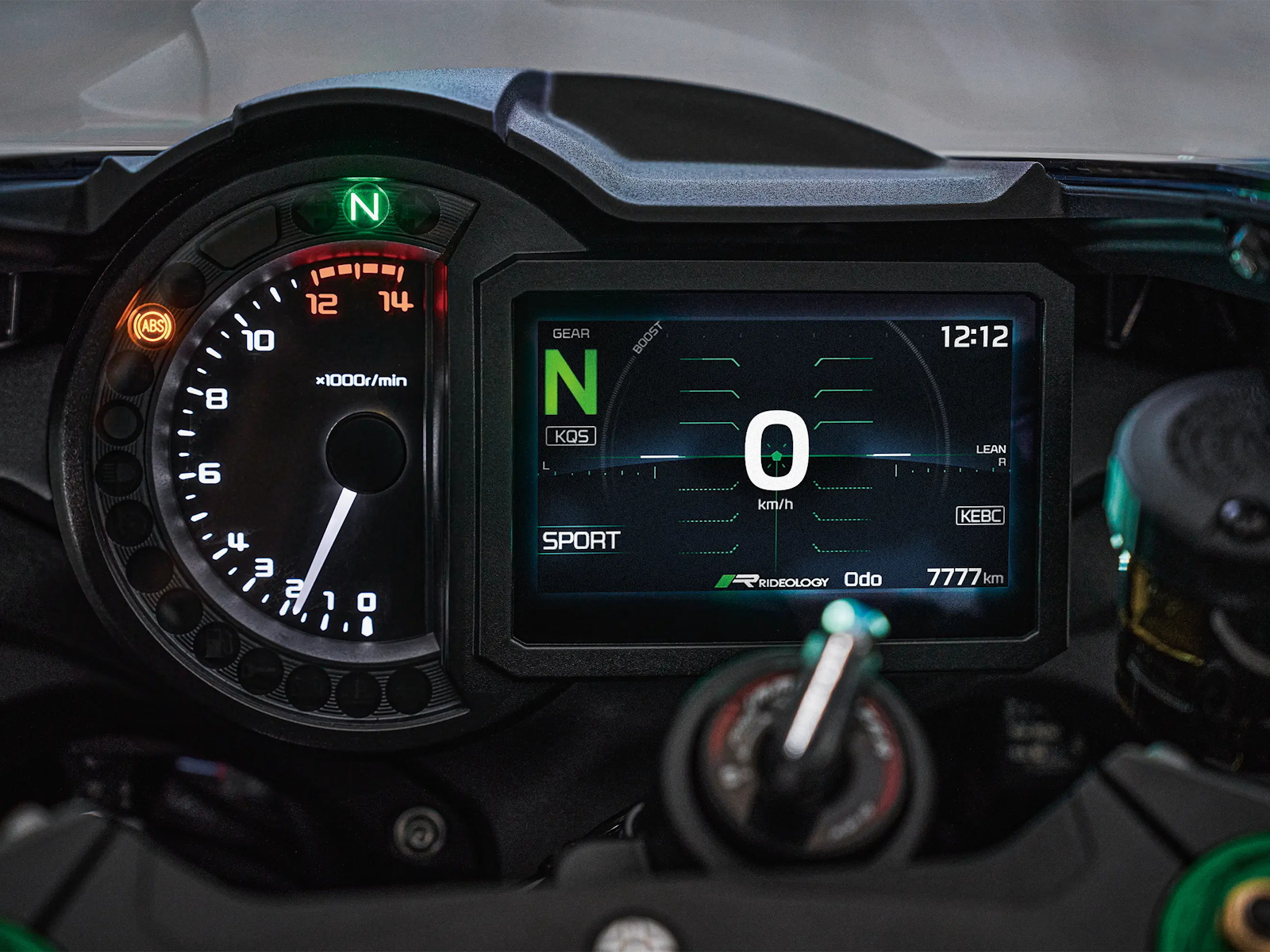
From the new 998cc in-line 4-cylinder supercharged engine, strong low- to mid-range torque pairs with the Ninja H2® hypersport motorcycle's distinctive high-rpm acceleration. Complementing the high level of control offered by the chassis and bodywork designed to harness the 300+ hp¹ of the mighty Ninja H2®R, Brembo's latest Hypure front brake calipers deliver flagship-worthy stopping performance. New aviation-inspired instrumentation brings a fighter jet feel to the cockpit, amplifying the visual rush of the Ninja H2 motorcycle's exhilarating acceleration. A full suite of rider support technology allows you to confidently explore the performance with intuitive control in a wide range of riding situations.
From the time the ignition is switched on to every twist of the throttle, the Ninja H2® offers a riding experience unlike anything else on the road.
Engine Management Technology
Economical Riding Indicator
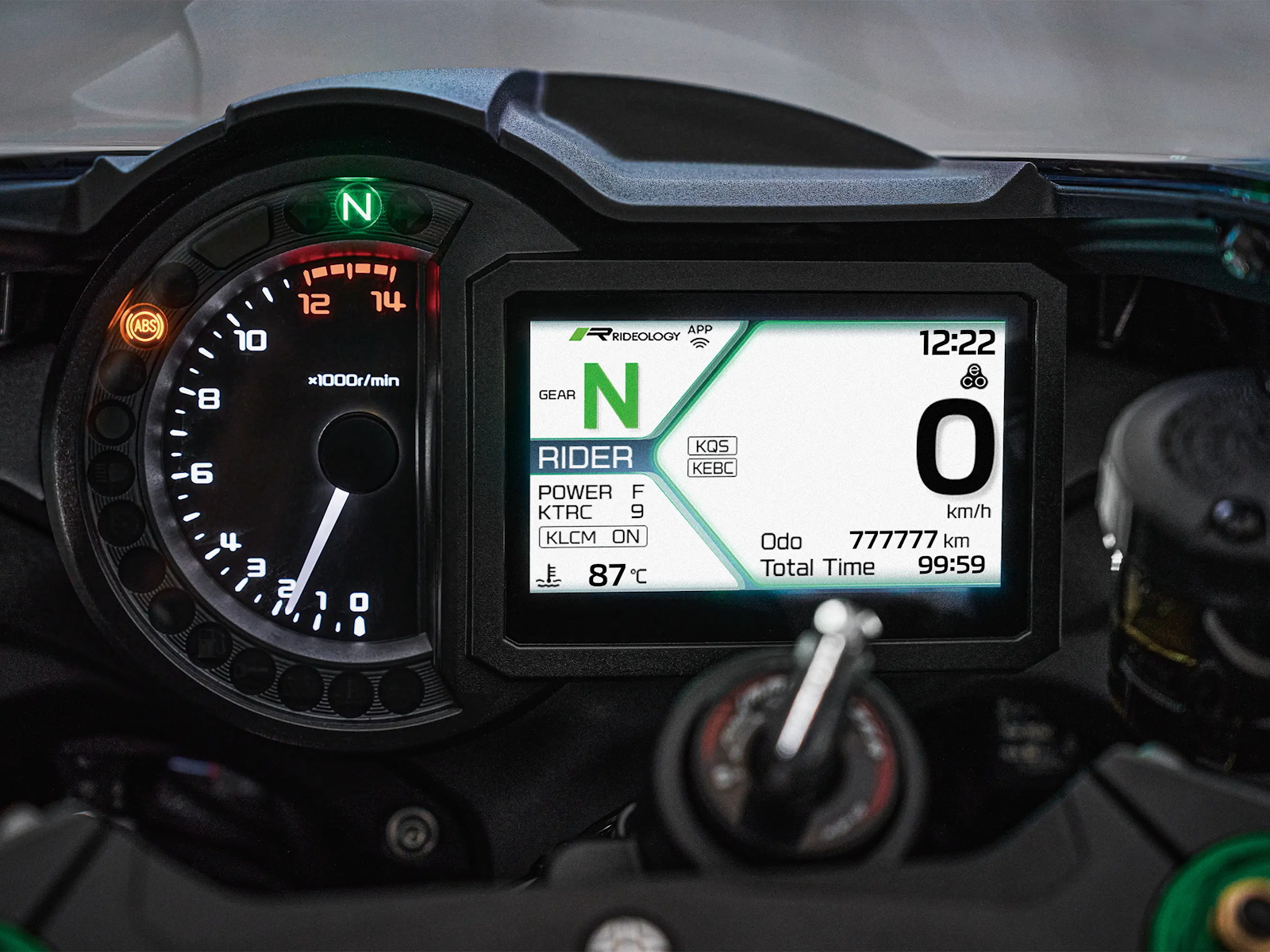
Using high-precision electronic control for engine management, Kawasaki models can achieve a high level of fuel efficiency. However, fuel consumption is greatly affected by throttle use, gear selection, and other elements under the rider's control. The Economical Riding Indicator is a function that indicates when current riding conditions are consuming a low amount of fuel. The system continuously monitors fuel consumption, regardless of vehicle speed, engine speed, throttle position and other riding conditions. When fuel consumption is low for a given speed (i.e. fuel efficiency is high), an "ECO" mark appears on the instrument panel. By riding so that the "ECO" mark remains on, fuel consumption can be reduced.
Electronic Cruise Control
Electronic Cruise Control allows a desired speed (engine rpm) to be maintained with the simple press of a button. Once activated, the rider does not have to constantly apply the throttle. This reduces stress on the right hand when traveling long distances, enabling relaxed cruising and contributing to a high level of riding comfort.
Electronic Throttle Valves
Kawasaki's fully electronic throttle actuation system enables the ECU to control the volume of both the fuel (via fuel injectors) and the air (via throttle valves) delivered to the engine. Ideal fuel injection and throttle valve position results in smooth, natural engine response and the ideal engine output. The system also makes a significant contribution to reduced emissions.
Electronic throttle valves also enable more precise control of electronic engine management systems like S-KTRC and KTRC, and allow the implementation of electronic systems like KLCM, Kawasaki Engine Brake Control, dual-direction KQS, and Electronic Cruise Control.
Kawasaki Engine Brake Control
The Kawasaki Engine Brake Control system allows riders to select the amount of engine braking they prefer. When the system is activated, the engine braking effect is reduced, providing less interference when riding on the track.
KCMF (Kawasaki Cornering Managment Function)
Using the latest evolution of Kawasaki's advanced modeling software and feedback from a compact IMU (Inertial Measurement Unit) that gives an even clearer real-time picture of chassis orientation, KCMF monitors engine and chassis parameters throughout the corner - from entry, through the apex, to corner exit - modulating brake force and engine power to facilitate smooth transition from acceleration to braking and back again, and to assist riders in tracing their intended line through the corner. The systems that KCMF oversees vary by model, but may include:
- S-KTRC/KTRC (including traction management and wheel lift management)
- KLCM (including traction management and wheel lift management) - Designed to optimize acceleration from a stop
- KIBS (including pitching management and corner braking management)
- Kawasaki Engine Brake Control
KLCM (Kawasaki Launch Control Mode)
Designed to assist riders by optimizing acceleration from a stop, KLCM electronically manages engine output to minimize wheel spin when moving off. With the clutch lever pulled in and the system activated, engine speed is limited to a determined speed while the rider holds the throttle open. Once the rider releases the clutch lever to engage the clutch, engine speed is allowed to increase, but power is regulated to minimize wheel spin and help keep the front wheel on the ground. The system disengages automatically once a predetermined speed has been reached, or when the rider shifts into third gear. Depending on the model, riders can choose from multiple modes, each offering a progressively greater level of intrusion.
KTRC (Kawasaki Traction Control)
KTRC, Kawasaki's advanced traction control system provides both enhanced sport riding performance and the confidence to negotiate low-traction surfaces. Multiple rider-selectable modes the number of modes varies by model) offer progressively greater levels of intrusion to suit the riding situation and rider preference.
Less intrusive modes maintain optimum traction during cornering. Designed with sport riding in mind, they facilitate acceleration out of corners by maximising forward drive from the rear wheel. And because Kawasaki's sophisticated software bases its dynamic analysis on the chassis' orientation relative to the track surface (rather than relative to a horizontal plane), it is able to take into account corner camber, gradient, etc, and adapt accordingly.
In the more intrusive modes (and for some models, in any mode), when excessive wheel spin is detected, engine output is reduced to allow grip to be regained, effectively enabling riders to negotiate both short, challenging patches (train tracks or manhole covers) and extended stretches of low-traction conditions (wet pavement, cobblestone, gravel) with confidence.
Some models equipped with IMU incorporate chassis-orientation feedback to offer even more precise management.
KQS (Kawasaki Quick Shifter)
Designed to help riders maximize their acceleration on the track by enabling clutchless upshifts with the throttle fully open, KOS detects that the shift lever has been actuated and sends a signal to the ECU to cut ignition so that the next gear can be engaged without having to use the clutch. On models that offer clutchless downshifts, during deceleration the system automatically controls engine speed so that the next lower gear can be selected without operating the clutch.
Power Modes
Models equipped with multiple Power Modes offer riders an easily selectable choice of engine power delivery to suit riding conditions or preference. The number of modes vary by model, as do the types of modes available. Some modes limit maximum power, while others offer milder (or sharper) throttle response. Other modes cater to specific riding or driving situations.
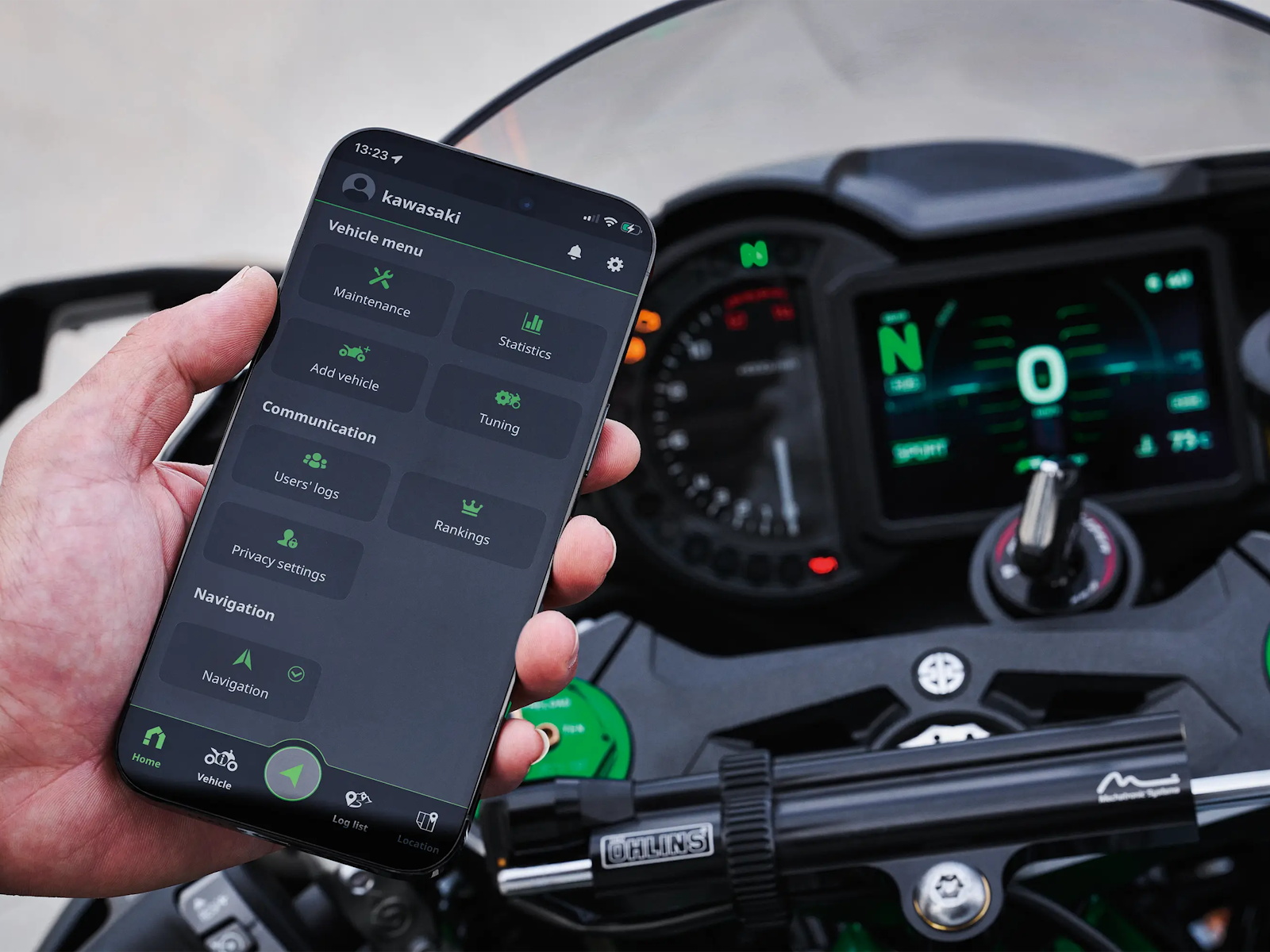
Rideology the App Motorcycle
Clever technology enables riders to connect to their motorcycle wirelessly. Using the smartphone application "RIDEOLOGY THE APP MOTORCYCLE," a number of instrument functions can be accessed, contributing to an enhanced motorcycling experience. Vehicle information (such as the odometer, fuel gauge, maintenance schedule, etc.) can be viewed on the smartphone. Riding logs (varies by model, but may include GPS route, gear position, rpm, and other information) can be viewed on the smartphone. When connected, telephone (call, mail) notices are displayed on the instrument panel. Riders can also make changes to their motorcycle's instrument display settings (preferred units, clock and date setting, etc.) via the smartphone. And on certain models, it is even possible to check and adjust vehicle settings (such as Rider Mode, electronic rider support features, and payload settings) using the smartphone. Smartphone connectivity with voice command is available.
Smartphone Connectivity
Originally offered on Kawasaki's on-road motorcycles, clever technology enables riders to connect to their motorcycle wirelessly. Using the smartphone application "RIDEOLOGY THE APP MOTORCYCLE," a number of instrument functions can be accessed, contributing to an enhanced motorcycling experience. Vehicle information (such as the odometer, fuel gauge, maintenance schedule, etc) can be viewed on the smartphone. Riding logs (varies by model, but may include GPS route, gear position, rpm, and other information) can be viewed on the smartphone and shared with other app users. When connected, telephone (call, mail) notices are displayed on the instrument panel. Riders can also make changes to their motorcycle's instrument display settings (preferred units, clock and date setting, etc) via the smartphone. On select models, features like Navigation and Voice Command are also supported. And on certain models, it is even possible to check and adjust vehicle settings (such as Rider Mode, electronic rider support features, and payload settings) using the smartphone.
On KX competition motorcycles with smartphone connectivity, riders can use the application "RIDEOLOGY THE APP KX" to adjust their bike's engine maps. Real-time Engine Monitoring, and Maintenance and Setup Logs are also available. For KX models equipped with GPS, "RIDEOLOGY THE APP KX2" offers additional functions like Trip Logs that riders can use to create track maps and analyse their performance. Traction Control Selection and Launch Control Selection allow riders to set and fine-tune these functions from the smartphone.
For side x sides, all-terrain vehicles and personal watercraft, "RIDEOLOGY THE APP POWERSPORTSi contributes to an enhanced off-roading or on-water experience. In addition to Trip Log recording and sharing, and vehicle management and maintenance support functions similar to those offered for on-road motorcycles, functions unique to off-road four-wheelers and personal watercraft are also available. Group Ride enables group members to view each other's locations on an in-app map on the smartphone. Geofence functionality alerts app users of no-entry and other zones. For select personal watercraft, RIDEOLOGY THE APP POWERSPORTS can also share person-overboard information with nearby app users.
Feature availability and functionality vary by model and application. For more information, please refer to the Kawasaki Connect web site.
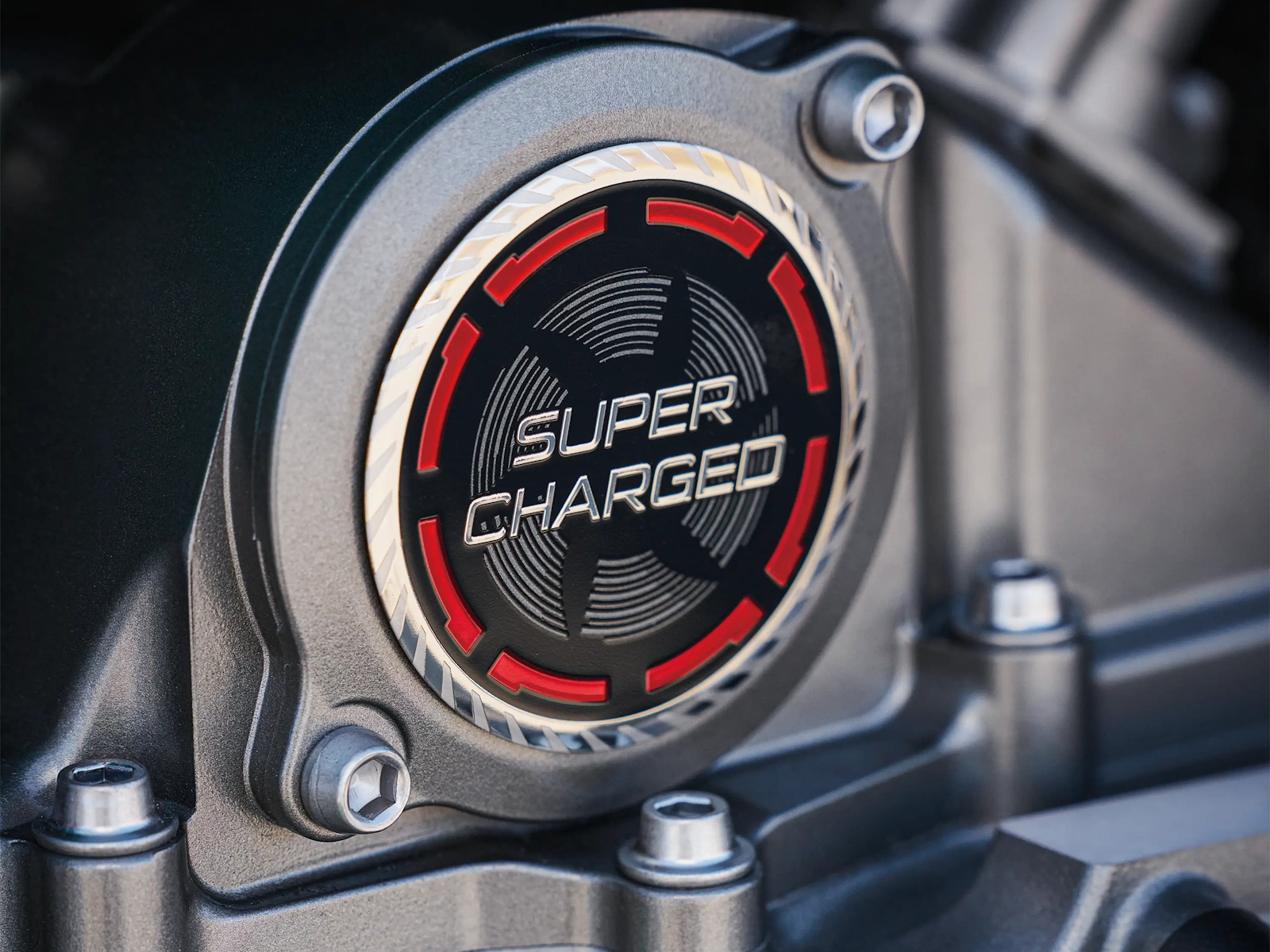
Supercharged Engine
Drawing on the know-how and technology possessed by the Kawasaki Heavy Industries (KHI) Group, Kawasaki's supercharged engines deliver high engine output while maintaining a compact design. The key to achieving this incredible performance lies in the engines' superchargers - vehicle-specific units designed completely in-house with technology from Kawasaki's Gas Turbine & Machinery Company, Aerospace Company and Corporate Technology Division.
One of the greatest benefits of designing the superchargers in-house and tailoring their design to match the engines' characteristics was that engineers were able to achieve high-efficiency operation over a wide range of conditions - something that would not have been possible by simply dropping in or trying to adapt an aftermarket automotive supercharger.
The importance of high efficiency in a supercharger is that, as the air is compressed, power-robbing heat gain is minimal. And while many superchargers are able to offer high-efficiency operation in a very limited range of conditions, Kawasaki's superchargers offer high efficiency over a wide range of pressure ratios and flow rates - meaning over a wide range of engine speeds and vehicle speeds. This wide range of efficient operation (similar to having a wide power band) easily translates to strong acceleration. The superchargers' high efficiency and minimal heat gain also meant that for motorcycle applications an intercooler was unnecessary, greatly saving weight and space, and enabling the engine's compact design.
Chassis Management Technology
ABS (Anti-Lock Brake System)
Kawasaki ABS systems use front and rear wheel sensors to constantly monitor wheel speed. Should information from either of the sensors indicate that wheel lock has occurred, the ABS ECU directs the pump in the ABS unit to modulate brake fluid pressure (releasing and reapplying pressure so that traction can be regained) until normal operation resumes. On models with front-wheel ABS, the same principles apply.
IMU-Enhanced Chassis Orientation Awareness
The strength of Kawasaki's cutting-edge electronics has always been the highly sophisticated programming that, using minimal hardware, gives the ECU an accurate real-time picture of what the chassis is doing. Kawasaki's proprietary dynamic modelling program examines changes in multiple parameters, enabling it to take into account changing road and tyre conditions.
The addition of an IMU (Inertial Measurement Unit) enables inertia along 6 DOF (degrees of freedom to be monitored: acceleration along longitudinal, transverse and vertical axes, plus roll rate, pitch rate and yaw rate. This additional feedback contributes to an even clearer real-time picture of chassis orientation, enabling even more precise management for control at the limit.
KIBS (Kawasaki Intelligent Anti-Lock Brake System)
Kawasaki developed KIBS to take into account the particular handling characteristics of supersport motorcycles, ensuring highly efficient braking with minimal intrusion during sport riding. It is the first mass-production brake system to link the ABS ECU (Electronic Control Unit) and engine ECU.
In addition to front and rear wheel speed, KIBS monitors front brake caliper hydraulic pressure, throttle position, engine speed, clutch actuation and gear position. This diverse information is analyzed to determine the ideal front brake hydraulic pressure. Through precise control, hydraulic pressure is modulated in much smaller increments than with standard ABS systems. The system limits rear wheel lift under heavy braking and takes downshifting into account while braking, allowing the rider to manage the rear brake. And because of the finer control, kickback to the brake lever is minimal, resulting in a very natural feeling.
Features May Include:
- NEW 998cc IN-LINE 4-CYLINDER SUPERCHARGED ENGINE FOCUSED ON REAL-WORLD ACCELERATION
- LIGHTWEIGHT TRELLIS FRAME COMBINING LIGHT HANDLING AND HIGH-SPEED STABILITY
- FULLY ADJUSTABLE HIGH-PERFORMANCE RACING SUSPENSION
- NEW ENHANCED BREMBO BRAKE PACKAGE WITH HYPURE CALIPERS
- UPDATED ADVANCED ELECTRONICS PACKAGE
- NEW AVIATION-INSPIRED TFT FULL-COLOR INSTRUMENTATION
- UPDATED SMARTPHONE CONNECTIVITY VIA RIDEOLOGY THE APP MOTORCYCLE† WITH AVAILABLE VOICE COMMAND AND NAVIGATION
Info
Industry
Powersports
Make
Kawasaki
Model
Ninja H2 Carbon ABS
Trim
Mirror Coated Spark Black
Year
2027
MSRP
39400
Category
Motorcycle
Subcategory
Sport
Specs
Horsepower
Maximum: 206 hp @ 11,000 rpm
Engine Type
4-stroke, in-line 4-cylinder, DOHC, 16-valve, liquid-cooled
Torque
Maximum: 99.5 lbs-ft @ 8,500 rpm
Engine Disp to Wgt
998 cc
Compression Ratio
11.2:1
Engine Cooling
Liquid-cooled
Transmission
6-speed, return shift, dog-ring
Drive Train
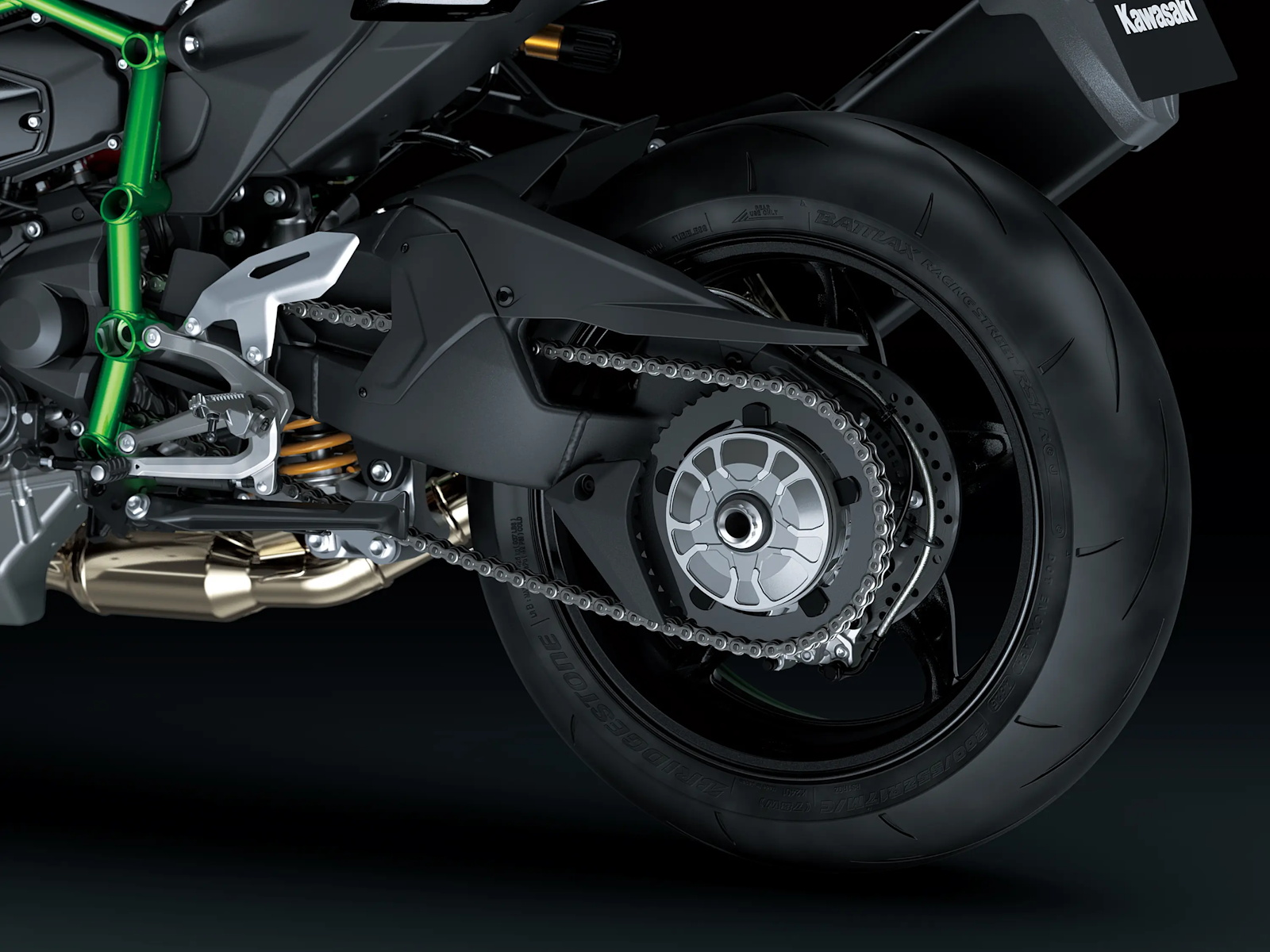
Final Drive: Sealed chain
Bore x Stroke
76.0 x 55.0 mm
Frame
Type: Trellis, high-tensile steel, with swingarm mounting plate
Rake
24.5°
Trail
4.1 in
Suspension (Front)
43 mm inverted KYB AOS-II fork with adjustable rebound and compression damping, spring preload adjustability and topout springs | Wheel Travel: 4.7 in
Suspension (Rear)
New Uni-Trak®, Öhlins TTX36 gas-charged shock with piggyback reservoir, 24-way compression and rebound damping adjustability, 15-way spring preload adjustability, and top-outspring | Wheel Travel: 5.3 in
Fuel Type
Gas
Fuel Capacity
4.5 gal
Fuel System
DFI® with 40 mm throttle bodies (4) with dual injection; Kawasaki Supercharger
Ground Clearance
5.1 in
Height
Overall: 44.3 in
Length
Overall: 82.1 in
Width
Overall: 30.3 in
Seat Height
32.5 in
Weight (Dry)
480.7 lbs
Weight (Wet)
524.8 lbs
Front Brake
Dual 330 mm semi-floating discs with dual radial-mount, opposed 4-piston Brembo Hypure monobloc calipers, Kawasaki Intelligent anti-lock Brake System (KIBS)
Rear Brake
Single 250 mm disc with opposed 2-piston Brembo caliper, Kawasaki Intelligent anti-lock Brake System (KIBS)
Wheelbase
57.3 in
Front Tire
Bridgestone Battlax RS11 120/70-17
Rear Tire
Bridgestone Battlax RS11 200/55-17
Ignition/Starter
TCBI with Digital Advance


